After dozens of kids cut ribbons June 29, 2023, to inaugurate major additions to Comiskey Park in Dubuque, Iowa’s North End neighborhood, “chaos” ensued, according to Mayor Brad Cavanagh and other attendees.
But it wasn’t bad chaos, it was just a sign of how excited kids were to race to the new splash pad and playground equipment that had been installed thanks to funding from the National Park Service Outdoor Recreation Legacy Partnership (ORLP) grant program. The updates turned a popular but deteriorating local park into an asset that draws families from all over the city, and even some out-of-towners.
The ORLP is funded through the Land & Water Conservation Fund (LWCF), which helps cities address their most pressing park and recreation needs. The nationally competitive program offers matching grants that empower local leaders to create and improve community parks. Since 1965, the LWCF has supported local park projects in all 50 states through oil, mineral, and gas leasing as a net benefit to the American people.
The National Park Service awarded two ORLP grants ($508,000 & $1.98 million) to the City of Dubuque for the revitalization of Comiskey Park. These grants spurred community engagement, leveraged philanthropy and other private sector support, created new jobs, and provided economic development. Specifically, the ORLP grant leveraged nearly $4 million in federal, city, and corporate dollars.
The ORLP improvements include more basketball courts, an event field, improved lighting, shade pavilions, native plants, picnic shelters and curved benches – to facilitate conversation — in addition to state-of-the-art playground equipment and the splash pad. Fifty trees were planted, helping to replace trees that were decimated by an emerald ash borer infestation.
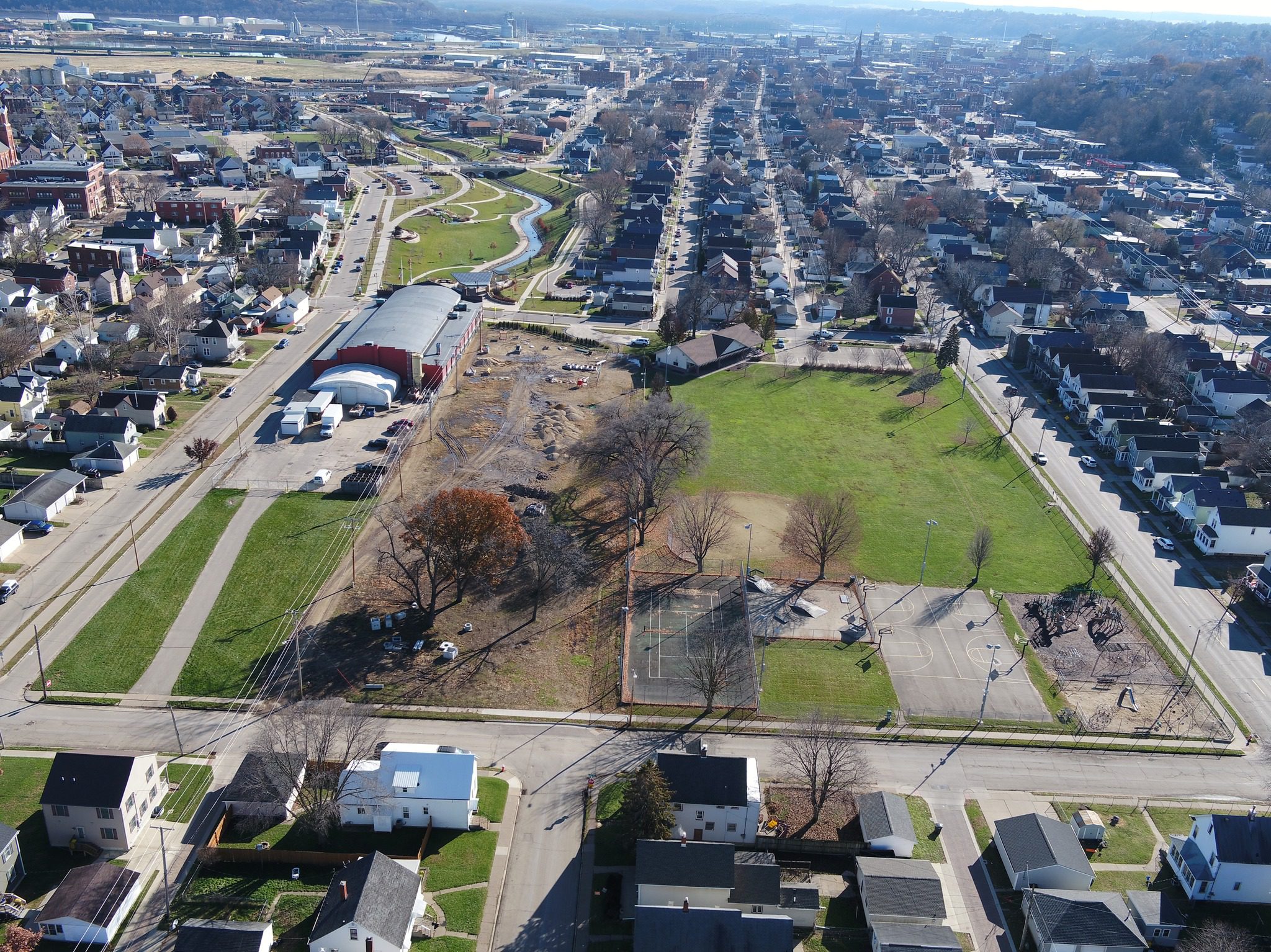
Cominsky Park, Dubuque, Iowa Before
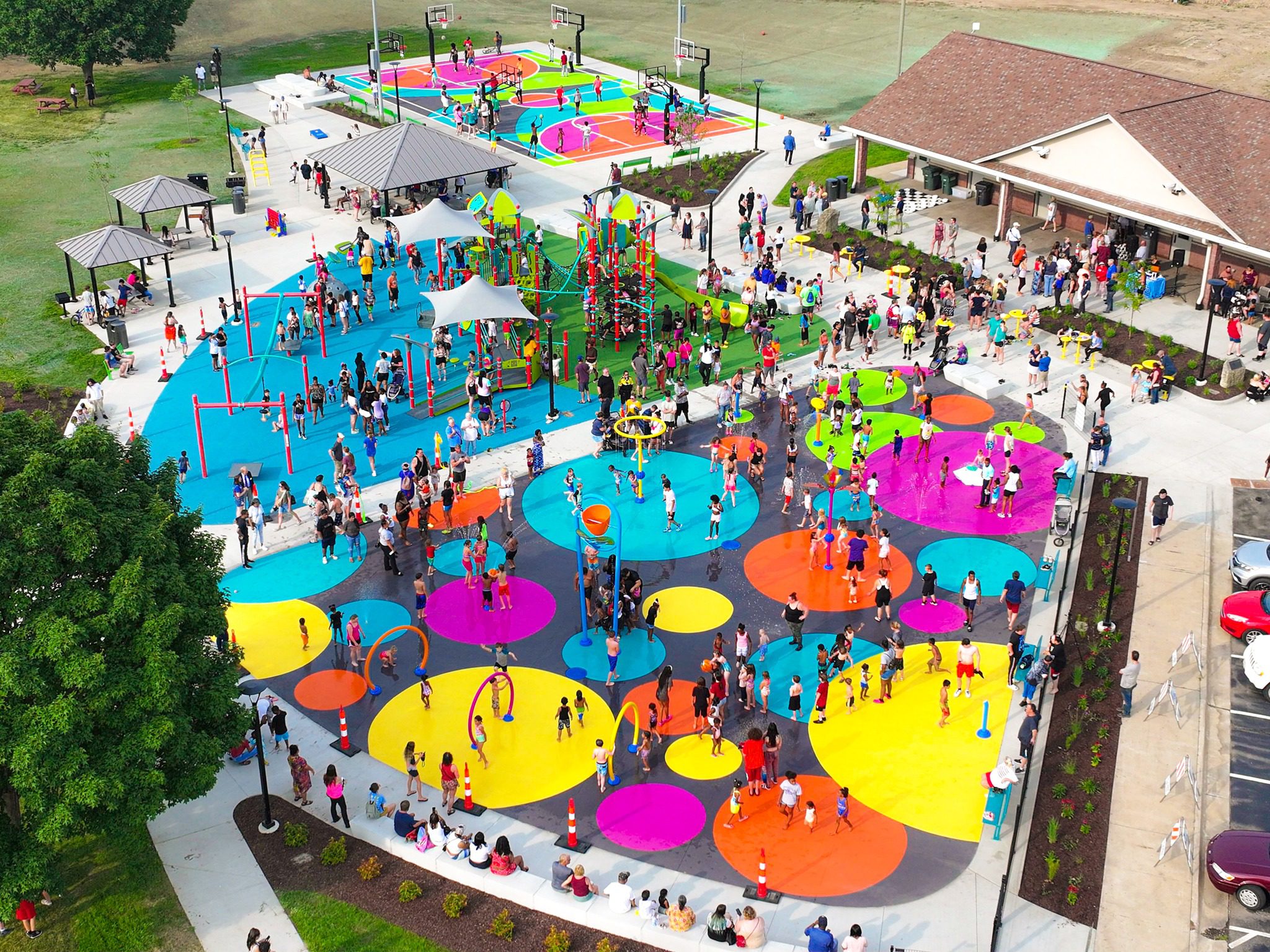
Cominsky Park, Dubuque, Iowa After
Park Drives Local Economic Revitalization
Cavanagh said the Comiskey Park improvements are a prime example of federal and local partnership, and government funding sparking private investment.
“This absolutely leverages dollars going forward,” he said. “That investment is often a major catalyst that gets neighborhoods pushing forward and gaining momentum. It’s a testament to how investment spurs investment going forward.”
The ORLP improvements were developed after multiple public meetings, where residents weighed in on their hopes for the park. Locals were invited to use monopoly money to decide what priorities they would like to fund at what cost; and the group “Hip Hop Parkitecture” used music, colored pencils and fun activities to guide kids in imagining their dream park.
Marie Ware, Dubuque Acting Project and Facilities Manager, noted that the improvements have also bolstered jobs and ripple economic impact, as the city has hired local contractors. “One contractor gets a bid and they subcontract to others,” she said. “Money is churning over within the community.”
Comiskey Park also augments the city’s business development, as it is located just a few blocks from an underinvested former commercial strip that city officials are working to revitalize. The park also links to a flood control and greenway project known as the Bee Branch, where an ugly storm sewer was replaced with an attractive creek and floodplain.
The historic North End neighborhood around Comiskey was once home to millworkers, and it now offers affordable, small but well-kept houses. Cavanagh calls it “a great place for a starting home or a smaller family, or if people don’t want to spend so much money on housing.”
The park — and the nearby business development — will be a boon for young families moving into the neighborhood, and long-time residents. Council Danny Sprank, who has lived across the street from the park since 2009 noted, last summer’s heatwave has made the brilliantly colored splash pad especially popular, with kids enjoying it from early morning until late into the evening. Meanwhile adults of all ages will enjoy the shelters and trails being created in phase two which will be completed by September 2026.
Catherine Nagel, Executive Director of the City Parks Alliance, stated “These projects are great examples of how a federal grant can be leveraged to have a significant impact on the health and economic vitality of local communities.”
The new trails will connect the park to the nearby county-run Heritage Trail where residents and visitors can bike, rollerblade or stroll through beautiful scenery, from the Mississippi River almost all the way to the city’s famous Field of Dreams baseball diamond.
“I believe it’s giving us more of a sense of place,” continued Sprank, noting that a family from Des Moines recently stopped by to play at the splash pad on their way to the Wisconsin Dells. “It’s starting to get noticed, people feel like this neighborhood could really be something.”
Ware said, “Comiskey was always one of our highest-used parks, I always said it got loved to death. It will be amazing when the whole thing is complete.”
The overhaul has increased residents’ feelings of “ownership and buy-in,” she added, and “given people ideas about other things that could be done in other areas of our community.”
The City Parks Alliance series on the Outdoor Recreation Legacy Partnership was written by Kari Lydersen. Kari is an assistant professor of journalism at Northwestern University and a Chicago-based journalist and author.