
The Outdoor Recreation Legacy Partnership (ORLP) is a nationally competitive grant program that provides funding to enhance recreation opportunities in rural and urban communities.
ORLP funding enables communities to create new outdoor recreation spaces, reinvigorate existing parks, and form connections between people and the outdoors.
Projects funded through the program generate significant returns—supporting economic development, strengthening health and fitness, improving public safety, and enhancing disaster resilience for communities across the country.
Established by Congress in 2014, the ORLP is managed by the National Park Service (NPS) and funded through the Land and Water Conservation Fund (LWCF). Using zero taxpayer dollars, the LWCF is funded by revenue from royalties paid by energy companies drilling for oil and gas on the Outer Continental Shelf.
The ORLP grant program provides federal dollars directly to communities, enabling them to reconnect people with the outdoors by meeting locally identified needs through locally led park and recreation projects. The nationally competitive program provides matching grants to support cities that have little to no access to outdoor recreation opportunities.
Since 2014, the ORLP has supported 157 projects nationwide, investing $470 million and leveraging an additional $496 million in matching funds.
ORLP provides matching grants to cities with populations of 25,000 or more for land acquisition, new park development, and renovation of existing outdoor recreation facilities. Projects can include recreation centers, playgrounds, sports fields, trails, open spaces, land reclamation projects, wetland acquisition, and amphitheaters.
The program requires a 1:1 match for every federal dollar invested, leveraging local public, private, and philanthropic resources to double the federal investment. Communities can meet this match through multiple sources, including city and state funding, private donations, land donations, in-kind contributions, volunteer services, and other federal programs with legislative authority, such as U.S. Department of Housing and Urban Development (HUD) Community Development Block Grants.
The ORLP funds a wide range of locally led projects that support a community’s individual needs. Past projects include:
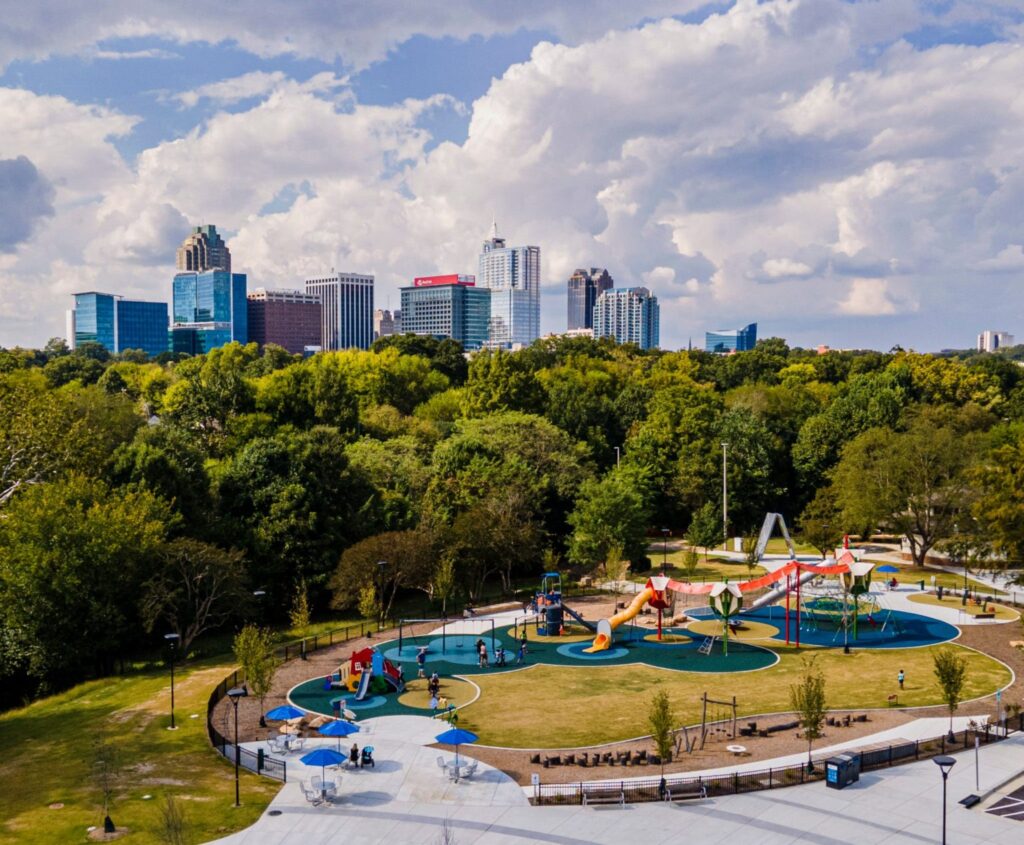
For more examples of funded projects, the Alliance has compiled a list of all grants awarded through the ORLP program, along with brief project descriptions.
First-Round ORLP Selected Projects
Second-Round ORLP Selected Projects
Third-Round ORLP Selected Projects
Fourth-Round ORLP Selected Projects
Fifth-Round ORLP Selected Projects
Sixth-Round ORLP Selected Projects
Seventh-Round ORLP Selected Projects
There are many options for cities to meet the 1:1 match for ORLP projects. This leveraging power is central to the program’s impact—ORLP helps cities unlock additional resources from diverse sources that strengthen long-term economic development, resilience, and sustainability.
Previous awards have included a combination of federal, city, state, private, and philanthropic dollars. Non-monetary contributions can contribute to a project’s total match amount, such as land donation or bargain sale, cash, in-kind contributions, and volunteer services.
There are some federal programs that can be used for matching dollars if a program has the legislative authority to do so. Common options include HUD’s Community Development Block Grants and the Federal Highway Administration’s Recreation Trails Program.
City Parks Alliance has created several resources to help communities develop successful grant applications.
The best place to start with questions about the ORLP application process is through your state’s LWCF officials.
City Parks Alliance teamed up with NPS staff to share insights on how to create a successful grant application.
Three City Parks Alliance reports demonstrate how the ORLP program is a smart investment in locally led park and recreation projects in communities across the U.S. Each report includes brief case studies of ORLP projects and mayoral testimonials.
This City Parks Alliance series explores the impact of the ORLP, profiling projects in Stamford (CT), Seattle (WA), and St. Paul (MN).