Challenge
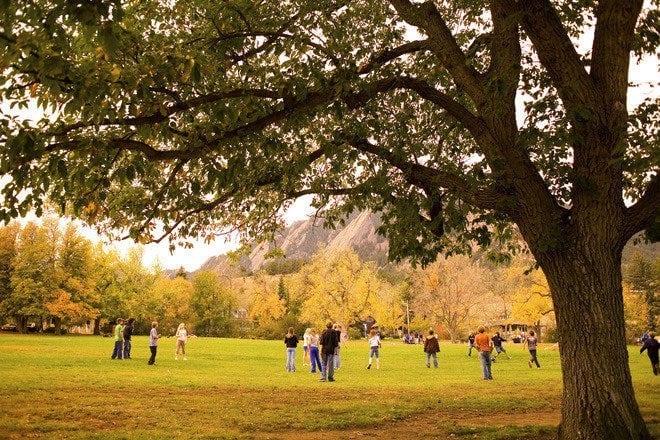
The Boulder Parks and Recreation Department was established in 1961. It oversees 1,800 acres of parkland in Boulder, 1,490 acres are developed, 313 acres are reserved for future development. The systems has neighborhood parks (under 20 acres), community parks (under 100 acres), city/regional parks (up to 300 acres), and civic spaces. The entire system includes 288 acres of managed turf and irrigated park lands, 15 miles of greenway trails, 43 athletic fields, 49 playgrounds, 36 park shelters, and an additional 47 mixed courts used for basketball, handball, or skate parks. Additionally, a separate city entity, the Department of Open Space and Mountain Parks in Boulder, manages another 45,000 acres of open space parkland around the city.
Funding Action Plan
The Boulder Parks and Recreation Department receives funds from several sources. The largest stream—$10.2 million or 40 percent of annual budget—comes from a Recreation and Activities Fund (RAF), mostly from user fees and other recreation program and facility revenues. RAF pays for maintenance and operation of recreation, fitness, and sports facilities and programs. Another 28 percent, or $7.15 million, comes from a 0.25 cent sales tax. The next $4.6 million, or 18 percent, comes out of the General Fund of property and sales taxes and other fees to fund park and forestry operations and department administration. Another 11 percent, or $2.8 million, comes from a 0.9-mill property and development excise tax, used for capital improvement and land acquisition. The remaining 2 percent, or half-a-million dollars, comes from the Colorado Lottery Fund a state conservation trust fund allocated to local governments by population for parks, recreation and open-space site maintenance and capital improvements.
Success Builds Upon Success
The second largest revenue stream is generated by a 0.25 cent sales tax assessed in the city of Boulder. It was approved by voters in 1995 and was planned to sunset in 2015. Initially envisioned as a source for development and maintenance of new parks, as economic conditions changed, the revenue supplemented the General Fund allocation for maintenance, operations and administration for the entire park system. Revenue is allocated to four categories:
- Parks Acquisition.
- Bond repayment.
- Management of seven specific Parks and Recreation areas
- Parks and recreation purposes per city attorney.
In 2012, three years before the sunset date, the tax was renewed with 85 percent voter approval. It will now expire in 2035. In 2014, the department published a master plan, a result of 18 months of community outreach and engagement meant to facilitate community engagement and maintain quality of life, largely favoring improvements to current parks over construction of new parks.