
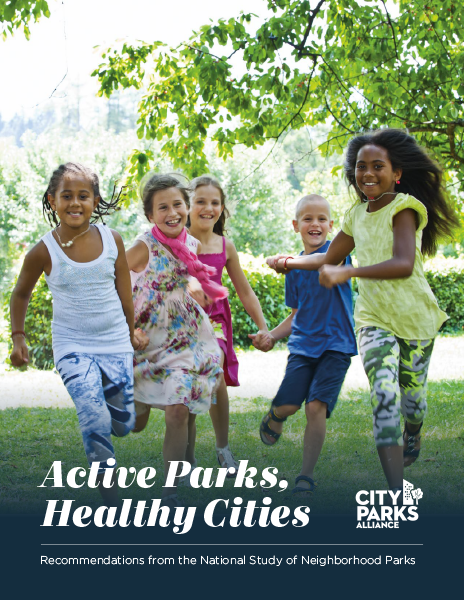
Active Parks, Healthy Cities distills the findings of the National Study of Neighborhood Parks into four major recommendation categories: Programming, Design, Marketing and Outreach, and Measuring Park Use.
The report curates multiple case studies for each of the four major findings from cities of different sizes and geographies for park and recreation professionals, health organizations, advocacy groups and others to replicate. Neighborhood parks that are well designed, programmed and marketed present an opportunity to address public health challenges.
Proximity to a park does not guarantee people will use it: amenities, signage, and programming all determine who is active in parks and how people use them.
Girls are less likely than boys to spend time in parks; only 40% of children and 35% of teenagers observed in neighborhood parks were girls.
Adults comprise 49% of park visitors. Seniors account for only 4% of park users, even though they make up nearly 20% of the general population.
When walking loops are present in parks, twice as many seniors are active. Walking loops encourage more people to engage in physical activity, yet less than one-third of neighborhood parks in the United States have pathways for walking.
A nearby park equipped with the right facilities and programming can help get people off the couch and outside where they have a better chance to enjoy healthier lives.
Nothing increases park use and physical activity as much as programming—providing supervised activities to help people make use of the space—with each additional supervised activity leading to a 48 percent increase in park use and a 37 percent increase in physical activity.
Seniors age 60+ comprise 18% of the population but only 4% of neighborhood park users. Physical activity can help prevent or mitigate the impact of chronic diseases, so park systems should invest in building better walking trails and enhanced programming to provide structure, encouragement, companionship, and fun.
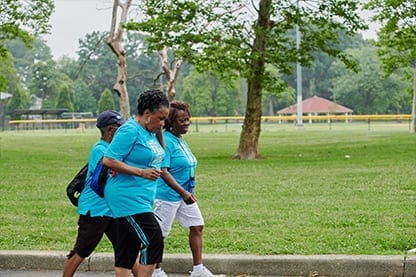
We Walk PHL, the result of public-private partnerships, is a free, 12-week, spring-and-fall program that generated about 750 users in 2017. Most of the walks cover about a mile at a moderate pace, making them especially attractive to seniors.
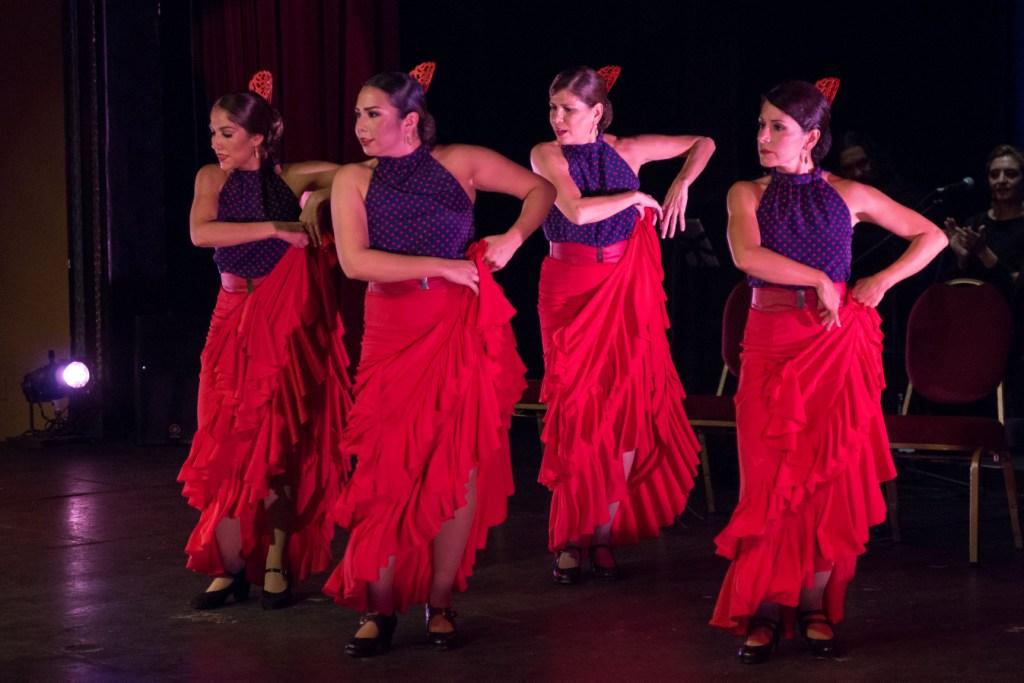
One of the nation’s longest-running recreation programs—84 years—is found in San Antonio, TX where dance classes in the city’s adult & senior centers feature jazz, flamenco, Latin, hip-hop, line, and folklorico. Over 3,500 San Antonians took one or more dance classes in 2017.
Children greatly benefit from programming, particularly if it includes activities that build physical coordination and social interaction. Parks can also play a critical role in fighting hunger during the summer, when there is no free school lunch, by coordinating activities with free summer lunch programs.
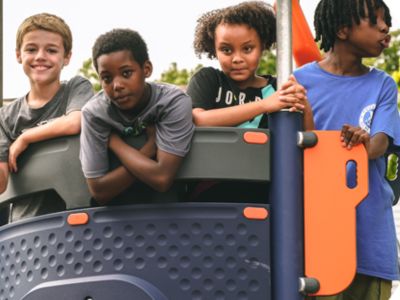
Eat, Play, Learn PVD is a multi-department attack on the summer health/hunger problem. It serves lunches at 33 neighborhood parks and has seen as much as 300% more children now eating meals in the summer.
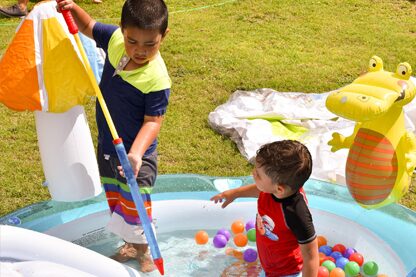
Every week, a retrofitted trailer brings balls, hula hoops, jump ropes, soccer goals, building blocks, scooters, and more to different venues. The program started with a $5,000 donation and has yearly direct costs of under $3,000.
Females are underrepresented in parks. Among teenagers, boys outnumber girls 65 to 35%. As for active sports, only 8 out of every 100 girls play sports in neighborhood parks, and for teen girls, it’s only 4 out of every 100. Teen and pre-teen girls require particular attention when it comes to park programming.

With up to 160 girls each season, Wild Things gives girls a supportive, comfortable experience with team sports while emphasizing fun. A “softball for life approach” allows them to sometimes go shoeless or to dance their way around the bases.
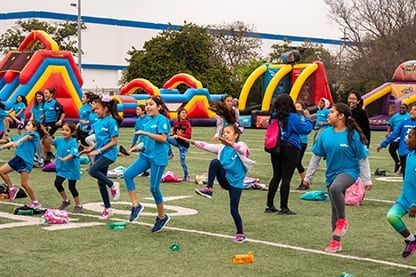
Girls Play L.A. fosters an interest in sports for girls in underserved communities. In 2018, there were 88 Girls Play L.A. sites with 27,000 participants. The program is offered quarterly for 8–10 weeks each session; participation costs only $10.
All local residents benefit from programming, particularly the type that encourages active, healthy lifestyles. Several cities across the country hold effective health and wellness initiatives fueled by partnerships, resulting in improved quality of life for residents and fostering an increased sense of community.
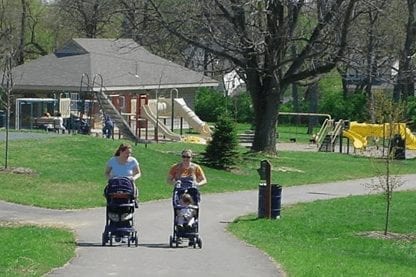
Providence’s health and wellness program offers yoga, stroller fit, cross fit, hybrid strength and conditioning, and more. Funding from the YMCA allows for free fitness classes in parks in lower-income neighborhoods; fees are charged in higher-income neighborhoods.
Parks evolve over time. By responding to community needs—and often by working in partnerships to stretch dollars further—city park departments can make design improvements that enhance health. Here are some elements found to be most significant by the National Study of Neighborhood Parks.
Parks with walking loops were found to have 80% more users, over twice as many seniors, and 90% higher levels of physical activity. Only 29% of neighborhood parks have walking loops despite these statistics.
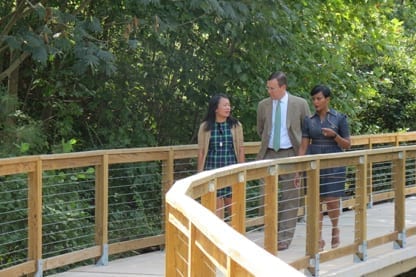
Adams Park is a 32-acre, multi-purpose recreational destination, complete with a pond, splash pad, tennis courts, playground, ball fields, golf course, and PermaTrek boardwalk. Park use has skyrocketed since the boardwalk’s installation.
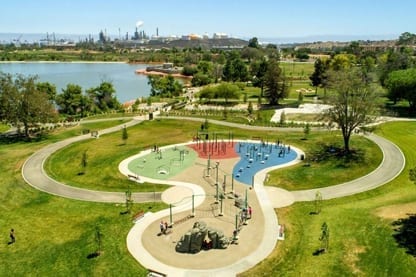
The LA Parks Foundation met community requests by building a walking and exercise path with exercise equipment stations at intervals around the park loop. The path and fitness stations are used daily by hundreds of people of all ages.
Twenty-five percent of all children’s park use takes place in play areas, which are the most common facility in neighborhood parks. Not all playgrounds inspire equal amounts of activity. Our study found that for every play element added to a playground, use (and activity level) increases by 50%.
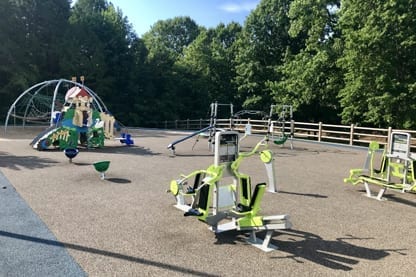
The multigenerational playground in Marion Diehl Park features a giant rope-climb and an electronic game integrated with the equipment. There is also a rubber-surfaced walking track as well as resistance and cardio machines.
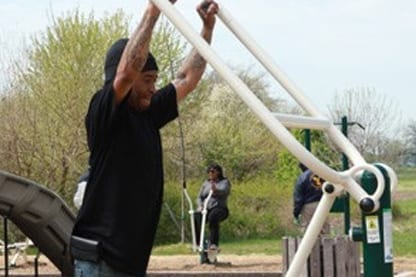
Anacostia Park’s free park fitness facility adjoins a popular children’s pirate ship-themed playground. The National Park Service purchased the equipment, and The Trust for Public Land received a grant to fund the installation and add landscape upgrades, totaling under $35,000.
Everyone enjoys something new—and that goes for sports and recreation, too. Over the years there have been all kinds of fads, from hula hoops to rollerblades to skateboard parks. Some have come and gone, others have stayed and grown. Here are some new ones that can provide health benefits in neighborhood parks.
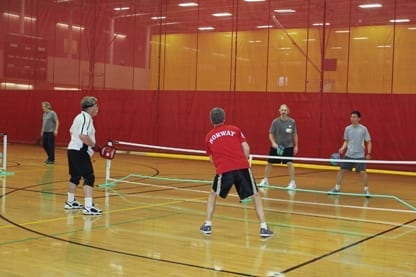
Pickleball is a lower-intensity combination of tennis, badminton, and ping-pong and is popular among seniors. Albuquerque converted tennis courts in six parks and has two dedicated pickleball centers.
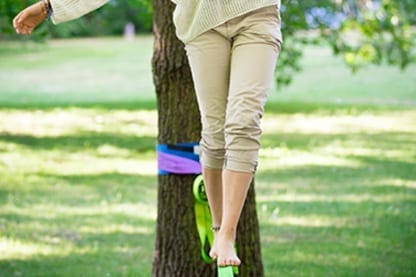
Boulder worked with slackline enthusiasts to design a pilot program that utilizes specific tree species and rigorous tree protection. There is also now a permanent course in a park. Crowdfunding, along with Slackline Industries, a local business, helped cover the cost.
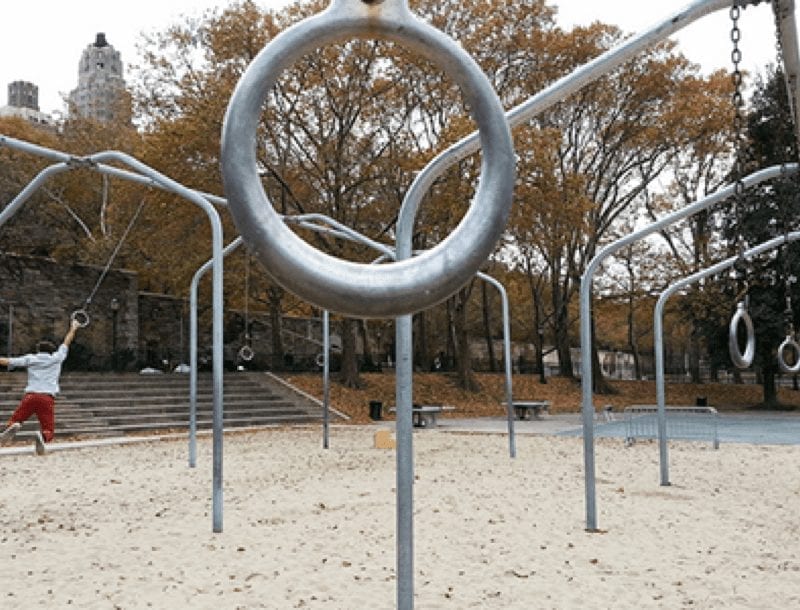
Traveling Rings are a big draw, even to small neighborhood parks, and very popular with teens and young adults. Santa Monica increased the accessibility of its traveling rings by installing both large and small series to meet the needs of different sized persons.
Maintenance of traditional brick and mortar bathrooms can place significant burdens on park agencies—from routine cleaning to removal of graffiti and even dealing with the theft of copper pipes. In our research, we found cities creating innovative outdoor restroom designs that go beyond the unsightly portable sanitation units you’d expect.
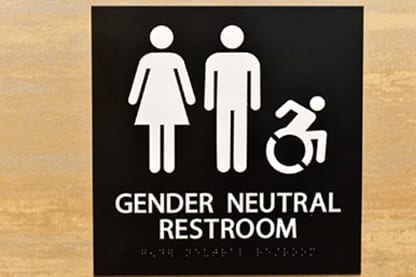
The result of a public-private-community partnership, Dolores Park now has innovative restrooms: stainless-steel toilets and shallow sinks are easy to clean and less vulnerable to vandalism. Built-in dividers can be moved to make the restroom larger or smaller.
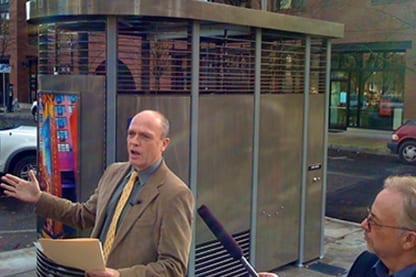
The Portland Loo is wheelchair-accessible and easy-to-clean. With open bars at the top and bottom, it is ventilated, and police can see how many people are within. The system uses water for flushing but there is no sink—only hand sanitizer—and blue lighting discourages heroin use.
On-site marketing, such as banners, posters, and signs, are proven effective at increasing park use and physical activity, and many cities are effectively using social media to connect people with parks. The study found that park departments deploying these kinds of publicity saw a 62% increase in users and a 63% increase in physical activity.
Lincoln is a leader sharing helpful messages with its populace by featuring signage with web addresses for upcoming programming. The city also has a “Rain to Recreation” sign that explains and illustrates park features that help reduce water pollution.
Greensboro uses Meetup to advertise and solicit participation in park exercise classes and programming, like “Yappy Hour” for dog training and a kids club. Since using Meetup, the classes have doubled in size.
Eleven of Waco’s parks are outfitted with signboards displaying QR codes linked to videos about the workout modules. The codes also and provides valuable data for the city by recording when and where videos are downloaded.
Westminster’s monster egg hunt on Facebook informed residents that park users could find mysterious eggs and take them to a nature center for a “verification of authenticity.” Park visitors have increased significantly since the egg hunt launched.
One of the key findings of the study was that most neighborhood parks are underused, a fact that only emerges with measurement. Parks that are well-used are much more likely to have a vocal constituency to support them, and park agencies that measure park use are better positioned to justify public spending to maintain and enhance them.
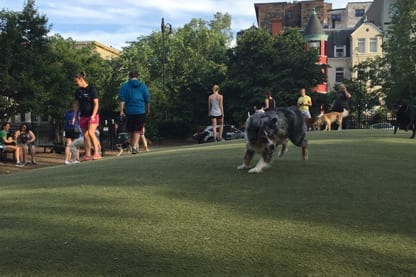
By observing play and recreation, three cities learned that many owners drive their pets to dog parks (instead of walking) and therefore didn’t get much exercise themselves. By improving walking routes to and from parks, cities learned they could stimulate more physical activity for them.
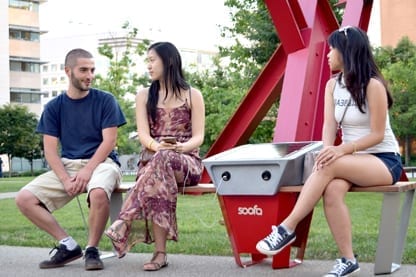
This solar-powered bench enables users to recharge electronic devices and park managers to gather usage data and the number of ambient devices nearby. In Philadelphia, the benches were used to collect data on the impact of park upgrades and temporary programming.
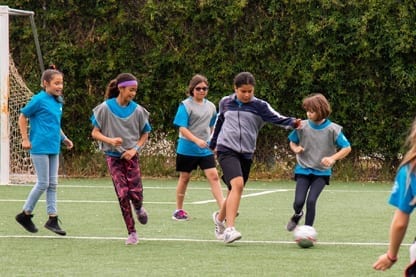
Differences in the parks—rather than differences in neighborhood socioeconomic characteristics—account for the variation in the children’s activity levels. Playgrounds, basketball courts, and more sidewalks all positively affect park use.
The RAND Corporation and City Parks Alliance, with help from The Trust for Public Land and funding from the National Institutes of Health, National Heart, Lung and Blood Institute, led a National Study of Neighborhood Parks to identify to what degree neighborhood parks in America’s cities encourage people to be physically active.
Over a two-year period (2014–2016) data collectors observed park design and behaviors in 174 neighborhood parks in 25 cities across the country. Researchers documented park use, including who was using the park, their age, gender, and level of physical activity (sedentary, moderate or vigorous), specific activities, as well as park characteristics, amenities, and current conditions. The research team also collected information on how parks were perceived by those who used them.
Armed with this information, parks and recreation departments, local decision-makers, and advocacy groups could seek improvements to existing parks that could help encourage more physical activity, improving overall health of residents.
Field staff collected data at selected parks within each city using the System for Observing Play and Recreation in Communities (SOPARC) method.
Cities in which parks were observed include: Fresno, CA; Jacksonville, FL; Lincoln, NE; Cleveland, OH; Los Angeles, CA; Columbus, GA; Manchester, NH; Pittsburgh, PA; San Francisco, CA; Kansas City, KS; Albuquerque, NM; Dallas, TX; Victorville, CA; Topeka, KS; Buffalo, NY; Waco, TX; Pueblo, CO; Louisville, KY; New York, NY; Westminster, CO; Flint, MI; Yonkers, NY; Gainesville, FL; St. Louis, MO; and Winston-Salem, NC.
The research team included Deborah A. Cohen, Senior Natural Scientist at the RAND Corporation; Catherine Nagel, Lead Investigator, Executive Director of City Parks Alliance; and Peter Harnik, Founder, Center for City Park Excellence, The Trust for Public Land.
Their published articles include: Exercise Bargain: Are Walking Loops Worth the Investment? in Environmental Health Perspectives; The Prevalence and Use of Walking Loops in Neighborhood Parks: A National Study in Environmental Health Benefits; and The First National Study of Neighborhood Parks, in American Journal of Preventive Medicine.